
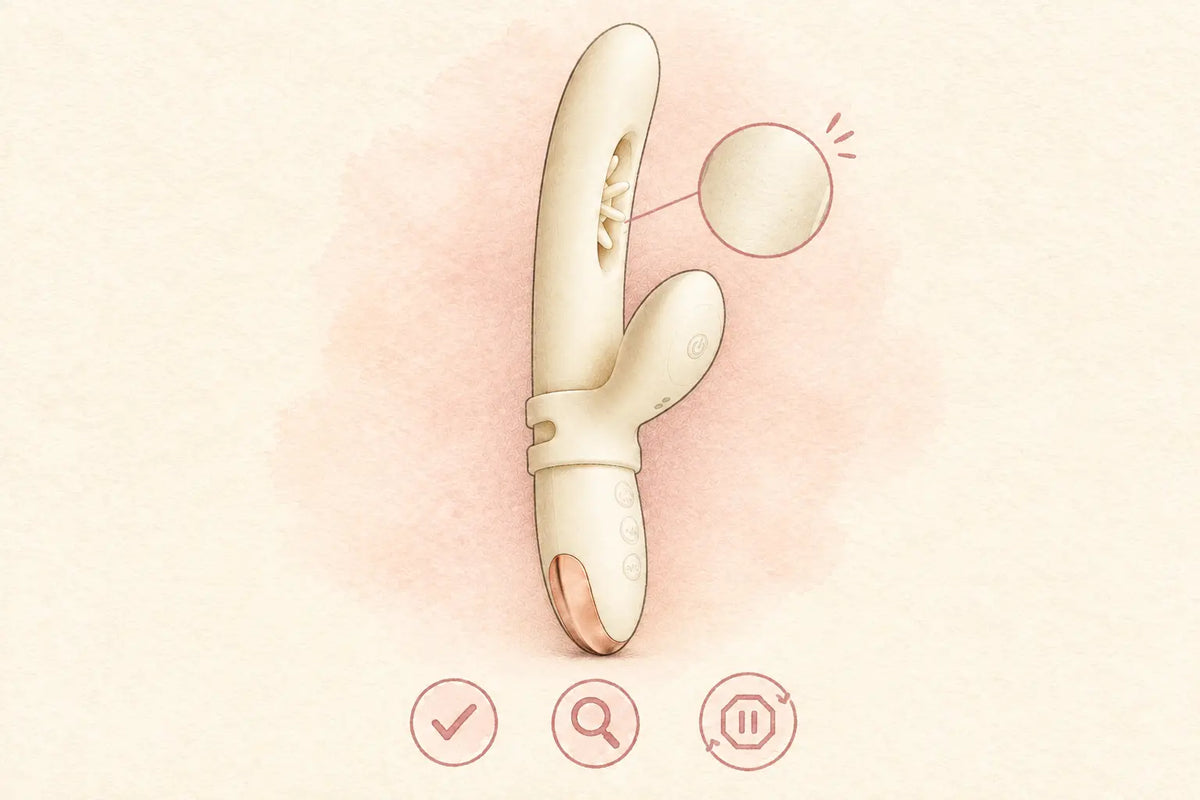
How long do vibrators last? There is no single expiration date that applies to every device. A vibrator may still work well after years of careful use, while another may develop a problem much sooner. Its condition tells you more than its age alone.
The useful question is not simply “How old is it?” but “Is the surface intact, does it work as expected, and can I care for it according to its instructions?” Here is a practical way to decide whether to keep using it, check a possible fault, or stop and ask the manufacturer for guidance.
Is there a standard lifespan for a vibrator?
No universal number of months or years can tell you when to replace a vibrator. Construction, use, cleaning, storage, and the condition of its powered parts all matter. A stated warranty period is also a service term, not an expiration date.
Start with the product's instructions. They may tell you how to clean it, which charger or batteries to use, what moisture exposure it can tolerate, and which parts can be replaced. If you no longer have the instructions, check the manufacturer's current product information or ask its support team.
A quick check before use is more helpful than counting birthdays: look at the contact surface, seams, buttons, charging area, and any detachable part. Then notice whether the device runs normally. A faint cosmetic mark and a split surface are not the same kind of issue.
Which signs mean you should stop using it?
Stop using the device and seek product-specific guidance if you notice any of these changes:
- A crack, tear, peeling finish, or rough edge on a surface that touches the body.
- A surface that stays sticky, sheds material, or is difficult to clean after following the maker's care instructions.
- A loose part, damaged seam, or visibly compromised seal.
- A new burning smell, smoke, unusual heat, or obvious battery swelling.
- An irregular grinding or rattling sound together with a change in performance, especially after a drop.
Do not use a damaged device against your body to see whether it “still feels fine.” Also do not open a sealed rechargeable device or try to repair its battery yourself. If it becomes hot, smokes, or smells burnt, switch it off and disconnect it from power if you can do so safely, then follow the manufacturer's support instructions. The U.S. Fire Administration advises stopping use of batteries that show unusual odor, heat, shape changes, leaks, or noises.
This is a condition check, not a way to diagnose a health problem. Planned Parenthood's sex-toy guidance recommends following the product's care directions and avoiding items with rough, sharp, or loose parts.
Does a charging problem mean it is time to replace it?
Not always. A device that will not start may have a charging or control issue rather than a worn-out body. If its surface and housing are intact, check the product instructions for the correct cable or batteries, charging setup, and travel-lock behavior. If there is visible damage, unusual heat, or a burning smell, stop there and contact the maker instead.
Use only checks that match your exact model's manual. Charging systems differ, so do not assume that a cable, reset method, or repair step for one design applies to another.
If the device still loses power unusually quickly or will not charge after the permitted checks, contact VIVIFIE support or the relevant manufacturer with the model name and a clear description of the problem. They can tell you whether support, a replacement part, or a new device is appropriate.
A simple keep, check, or replace decision
Keep using, with normal care: The surface is intact and easy to clean as directed, parts are secure, and the device operates as expected. Continue to follow its instructions and check for changes.
Check the instructions or troubleshooting guide: The device appears undamaged but will not start, charge, or respond as expected. Confirm the correct setup for that model before treating it as expired.
Pause use and contact the maker: You see a crack, persistent surface change, loose part, damaged seal, or performance change you cannot explain. Ask for product-specific advice rather than guessing whether cleaning or repair is enough.
Replace when appropriate: The manufacturer confirms that a damaged or faulty device should not be used or cannot be serviced, or you cannot restore a clean, intact contact surface. Replacement is a decision about condition and support options, not a date on the calendar.
Can care help a vibrator last longer?
Good care may help you notice changes early and avoid preventable damage, but it cannot guarantee a particular lifespan. Follow the manual's cleaning method, let the device dry as directed before storage or charging, and store it where it will not be crushed or rubbed against other items. Do not assume that every model is fully waterproof or can be disinfected in the same way.
Our guide to cleaning a vibrator explains how material, waterproof information, drying, and storage affect the care routine. This article focuses on when a change in condition calls for a different decision.
Does the warranty tell you when to replace it?
No. Warranty coverage describes what support may be available under a seller's current terms. It does not certify that a device is suitable for use until the last day of coverage, nor does the end of coverage mean an intact device has expired.
If you own a VIVIFIE product, keep your order details and check the current warranty information before contacting support about a fault. The applicable terms and next step depend on your purchase and the issue you are reporting.
Frequently asked questions
Can I keep using a vibrator if the surface has a crack?
Pause use. A crack or rough edge on a contact surface is different from a harmless cosmetic mark. Check the manufacturer's guidance and ask whether the item should be replaced; do not assume that cleaning or covering the area restores the original surface.
Does weaker battery performance mean I need a new vibrator?
Not necessarily. First check the correct charging setup and the product's permitted troubleshooting steps. If performance remains poor, or the device has heat, odor, swelling, or visible damage, stop using it and contact the maker.
If the warranty has ended, has the vibrator expired?
No. Warranty dates and product condition answer different questions. Inspect the device and follow its care instructions; stop and seek guidance if you find damage or a concerning change.
The takeaway
How long a vibrator lasts depends on the device and its condition. There is no trustworthy universal replacement schedule. Keep using an intact, normally functioning device with appropriate care; troubleshoot an undamaged device that stops working; and pause use when you notice damage or an unexplained change. When in doubt, the manual and manufacturer are better guides than a fixed number of years.