Using a vibrator during sex can be simple, but it often feels less intuitive than using one alone. Two people are moving, space may be limited, and the controls can become difficult to reach. A little planning helps the toy support the moment instead of interrupting it.
Start by agreeing where the vibrator may be used, learning its controls before sex, and choosing a placement that leaves room for comfortable movement. Begin at a low setting and change one thing at a time—placement, pressure, movement, or vibration—so both partners can tell what feels comfortable.
How to use a vibrator during sex in five steps
1. Agree on areas, boundaries, and a way to pause
Before turning the vibrator on, talk about which areas are welcome and which are not. A quick check-in can be specific: “Would you like to hold it, or would you like me to?” and “Tell me if you want less pressure, a different setting, or a pause.” Consent remains changeable throughout the experience.
The conversation does not need to become a formal negotiation. The goal is to make it easy for either person to slow down, reposition the toy, or stop without having to explain in the middle of the moment.
2. Learn the controls before your bodies are in position
Check how the vibrator turns on and off, how the intensity changes, and whether it has a travel lock. Test the starting level against a hand or another less sensitive area. If the buttons are small or easy to confuse, decide who will control them before movement begins.
Use the charger, batteries, and operating instructions for that exact model. Do not assume that controls or reset steps work the same way across different devices.
3. Choose placement while both partners are relatively still
It is easier to find a comfortable contact point before movement speeds up. Place the vibrator externally, internally, or on another agreed area only as the product is designed to be used. If penetration is part of the activity, make sure the toy does not create uncomfortable pressure or force either partner into an awkward angle.
There is no universal correct placement. Some people prefer direct contact, while others prefer vibration beside or above a sensitive area. Small adjustments can change the sensation without requiring a higher setting.
4. Begin lower than you think you need
A setting that feels mild in your hand may feel stronger on a sensitive area or when two bodies add pressure. Start low, pause long enough to notice the response, and increase only if the person receiving the vibration wants more.
If the sensation becomes sharp, uncomfortable, or numbing, reduce the intensity, move the toy slightly, or stop. More intensity is not automatically better.
5. Change one variable at a time
Once placement feels comfortable, add body movement before changing the vibration. Then adjust one factor—such as pressure, angle, speed, or setting—and check the result. Changing everything together makes it difficult to know what helped or what caused discomfort.
Who should hold and control the vibrator?
Either partner can hold it. The better choice is the person who can keep a relaxed grip, reach the controls, and respond quickly to feedback.
- The receiving partner holds it: This can provide direct control over placement and intensity.
- The other partner holds it: This can free the receiving partner's hands, provided the holder follows verbal and nonverbal feedback.
- Partners switch roles: If an arm or wrist becomes tired, pause and hand over control rather than trying to maintain an uncomfortable position.
Avoid gripping so tightly that pressure becomes difficult to regulate. A toy with reachable controls and a shape that is easy to hold may be more practical than one with the highest number of settings.
Choose a vibrator that fits the available space
The vibrator that works well during solo use may not fit between two bodies. Consider the space available, who will hold it, and whether the controls remain accessible.
- Compact external vibrators can be easier to place in body-close positions, but a very short shape may be harder to reach from some angles.
- Broader-head or wand-style vibrators can provide wider external contact, but they usually need more open space and may require two hands to reposition comfortably.
- Internal or dual-contact vibrators should be used only as their instructions allow. Their shape may work well for some forms of partnered play but may feel crowded or restrictive in others.
- Detachable external modules can offer another way to explore external contact without requiring the complete device in every situation.
Choose by fit and control rather than assuming that one category is best for every couple or position.
Placement ideas for different kinds of partnered play
“During sex” does not have to mean only intercourse. A vibrator can be part of manual touch, oral sex, mutual exploration, or penetration. The useful placement depends on the activity and the body area involved.
During manual or oral play
One partner can use the vibrator externally while the other uses hands or mouth elsewhere. Keep the device away from areas where it blocks comfortable movement, and make sure the person holding it can switch it off quickly.
In side-by-side positions
Side-by-side positions may leave one partner's hand free and reduce the amount of body weight pressing on the toy. A compact device can be easier to reposition here, but comfort still depends on individual bodies and the toy's shape.
In body-close positions
When the pelvises are close, begin with a smaller external contact area and establish placement before movement. If the toy slips or the controls become trapped, pause and reset rather than increasing grip or pressure.
In positions with more open space
Positions that leave more room around the hips may accommodate a longer handle or broader head. Check that the holder's wrist remains comfortable and that the cable, handle, or body of the device does not become trapped.
These are starting points, not performance instructions. If a position causes strain, pain, or unwanted pressure, change it or stop.
What if the vibrator slips, gets in the way, or feels too intense?
Small problems are easier to solve when both partners pause movement first.
- If it slips: Return to a still position, adjust the contact point, and restart slowly. More pressure may make slipping or discomfort worse.
- If the controls are blocked: Change who holds the toy or rotate it so the buttons remain reachable.
- If it feels too intense: Lower the setting, reduce pressure, or move slightly away from direct contact.
- If a hand or wrist gets tired: Switch roles, change position, or take a break.
- If there is pain, burning, persistent numbness, unusual bleeding, or another concerning symptom: Stop using the device. Seek appropriate medical advice if the symptom is severe, continues, or worries you.
The goal is not to keep the vibrator in place at all costs. Comfort and communication matter more than completing a particular technique.
Keep communication simple during the moment
Short questions are often easier than broad ones: “More or less?”, “Same place?”, or “Do you want to hold it?” Pay attention to movement and tension as well as words, but do not treat body language as a substitute for consent.
If you are still deciding how to raise the idea of toys with a partner, have that conversation outside the bedroom first. A toy should be an optional shared tool, not a surprise or a test of the relationship.
Cleaning and sharing a vibrator
Follow the manufacturer's instructions for cleaning, drying, waterproofing, and storage. Our guide to cleaning a vibrator explains why the method depends on the material, motor, seams, and waterproof rating.
Sharing a sex toy can transfer body fluids. Planned Parenthood recommends cleaning toys between users and using a new condom on the toy when a different person uses it. Change the condom and clean the toy as directed before moving it between different body areas. Product instructions should take priority if they are more specific.
Check the surface and parts before use. Do not use a device with a crack, rough edge, loose part, unusual heat, burning smell, swelling, or other concerning damage.
How VIVIFIE may fit the decision
VIVIFIE products should be considered by the same practical factors as any other vibrator: size, grip, control placement, the type of contact you want, and the product's instructions.
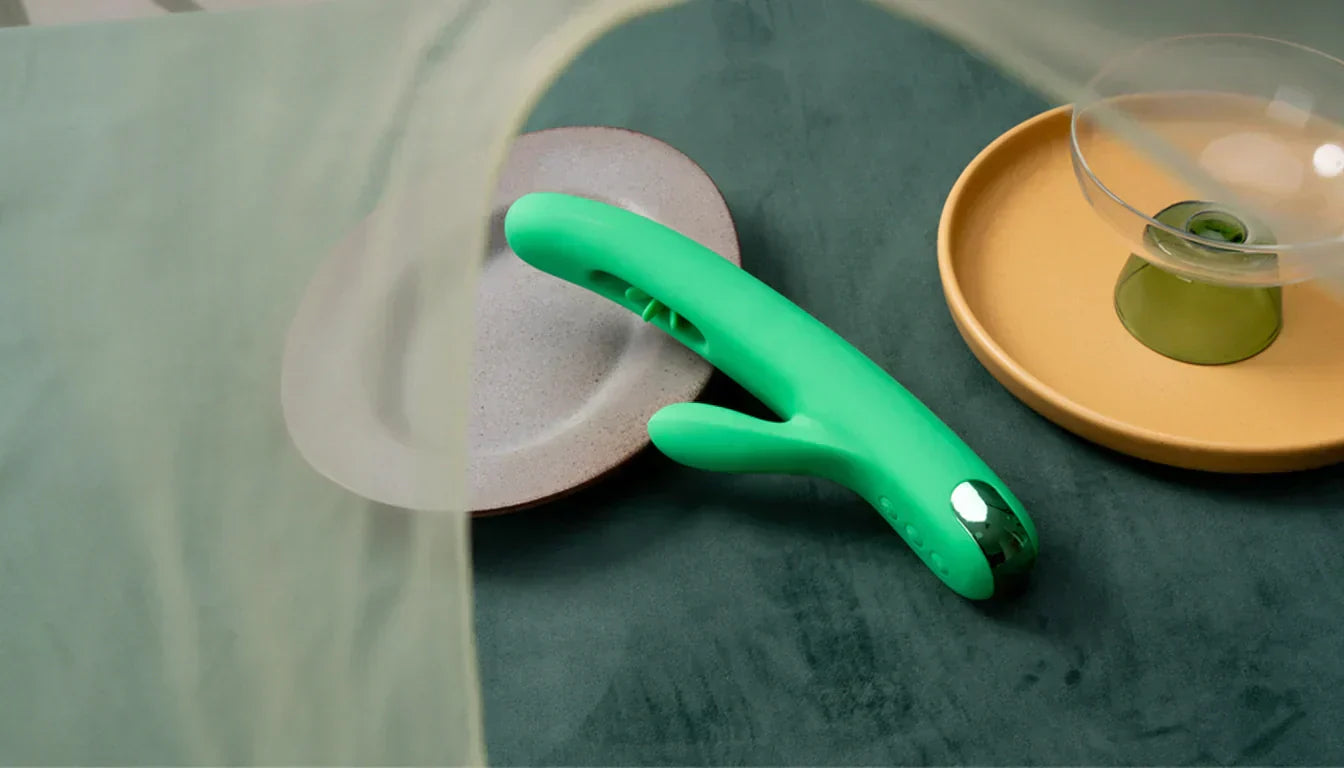
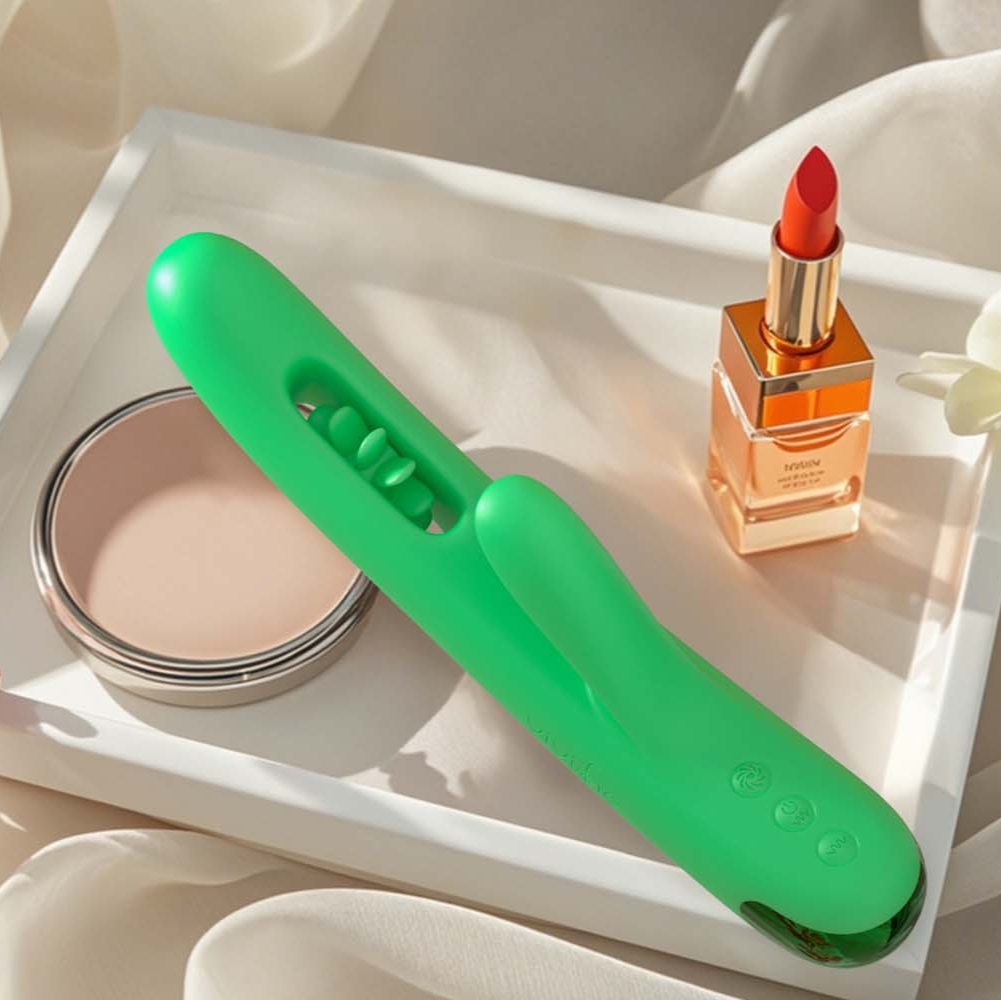
The VELORA Wing detachable external module is listed as usable separately from the main VELORA device. That can provide an external option when a full dual-contact shape is not the right fit for the available space. It does not mean the product will suit every position or every body.
If compact handling is your main concern, the small rabbit vibrator guide explains how overall dimensions, handle reach, external-arm alignment, and controls affect fit. Compare those details with your preferences before choosing.
Frequently asked questions
Is it normal to use a vibrator during sex?
Yes. People may use vibrators alone or with partners in many different ways. Using one is a personal preference, not evidence that a partner or relationship is inadequate.
Who should hold the vibrator during sex?
Either partner can hold it. Choose the person who can keep the placement comfortable, reach the controls, and respond quickly to feedback. Switching roles is also an option.
What if there is not enough room between our bodies?
Pause and change the position, use a smaller external device, or move the vibration to another agreed part of the activity. Do not force a toy into a tight space or increase pressure to keep it in place.
Can partners share the same vibrator?
They can, but sharing can transfer body fluids. Clean the toy according to its instructions and use a new condom when a different person uses it or when moving it between different body areas. Check that the barrier is compatible with the toy and intended use.
The takeaway
The easiest way to use a vibrator during sex is to reduce the number of things you are trying to manage at once. Agree on boundaries, learn the controls, establish placement while still, begin low, and change one variable at a time. Choose a device that fits the available space and remains easy to control. If something slips, feels uncomfortable, or becomes distracting, pause and adjust—the vibrator is there to support shared exploration, not turn it into a performance.