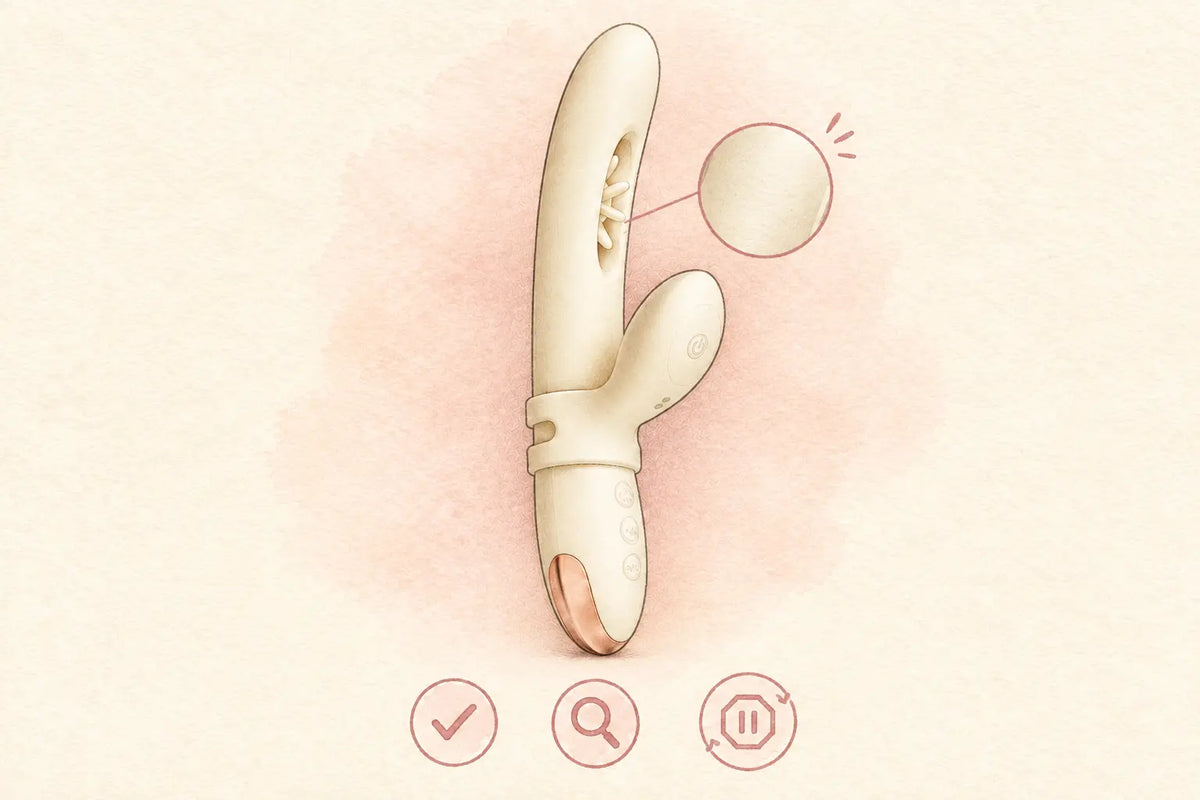

Multiple orgasms generally mean having more than one orgasm during the same period of sexual activity. The orgasms may happen close together or after a longer pause, and the experience can feel different from one person—or one occasion—to another.
If you want to explore another orgasm, the most useful approach is not to force your body to repeat the first one. Pause long enough to notice how you feel, then choose whether to continue gently, lower the intensity, move to a different area, or stop. Any of those choices can be the right one.
What counts as multiple orgasms?
There is no single timing rule. Some people use the term for two distinct orgasms separated by a brief dip in arousal. Others use it when several peaks feel close together or when another orgasm happens after a longer rest during the same session.
Research is still limited. A 2021 exploratory survey of 419 women who identified as multiorgasmic found several different profiles and patterns rather than one universal experience. That matters because a guide can offer options, but it cannot prescribe one sequence that every body should follow.
Multiple orgasms also do not have to feel identical. The second may feel stronger, softer, shorter, slower to build, or simply different. A satisfying experience does not become less valid because it includes one orgasm instead of several.
Can women have multiple orgasms?
Some women and other people with vulvas can become aroused again after orgasm and experience another one. Some need more time, and some do not want or experience another orgasm in the same session.
Cleveland Clinic notes that some people may become sexually aroused again within minutes, while others need more recovery time. The International Society for Sexual Medicine also emphasizes that not all women have multiple orgasms and that the subject has not been studied extensively.
The practical conclusion is simple: possibility is not a promise. You do not need to prove that your body can do it, and a partner should not treat it as a performance target.
Before trying for another orgasm
The first step happens before the first orgasm. Create conditions in which you can pay attention to sensation instead of rushing toward a number.
Leave enough time and privacy
A deadline makes it harder to pause, change direction, or decide that you are finished. Choose a time when stopping after one orgasm will feel just as acceptable as continuing.
Know what already feels comfortable
Start with a type of touch, pressure, rhythm, or toy setting that you already understand. A familiar path gives you a useful reference point. It also makes it easier to notice what changes after orgasm.
Reduce avoidable friction
If genital rubbing or insertion is part of the activity, use enough lubricant for comfort and confirm that it is compatible with the toy and barrier you are using. Reapply if repeated movement begins to feel dry or irritating.
Agree on an easy way to pause
With a partner, decide that either person can slow down, move a hand or toy, or stop without having to defend the decision. Multiple orgasms are optional; consent and comfort remain changeable throughout the experience.
What to do after the first orgasm
The moments after the first orgasm are where many fixed “how-to” lists become unhelpful. Direct touch may still feel good, or it may suddenly feel too intense. Use your response to choose the next step.
1. Pause and notice
Stop or become still for a moment. Notice whether you feel interested, neutral, tired, comfortable, or oversensitive. There is no required waiting time, and you do not need to decide immediately.
2. Choose one of four paths
- Continue: If the same touch still feels comfortable, continue at a pace you can adjust easily.
- Lower: Reduce pressure, speed, or vibration if direct stimulation suddenly feels sharp or overwhelming.
- Change area: Move beside the most sensitive point, use broader or indirect contact, or shift between external and internal stimulation if that is comfortable and appropriate for the activity.
- Pause or stop: Take a longer break or finish the session if your body feels done. Stopping is not a failed attempt.
3. Change one variable at a time
Adjust pressure, placement, rhythm, or intensity separately. If everything changes at once, it becomes difficult to identify what helped and what felt distracting.
4. Let arousal rebuild in its own way
Another orgasm may build quickly, slowly, or not at all. Stay with sensations that feel good instead of repeatedly checking whether you are “close enough.” The aim is continued pleasure, not completing a sequence.
How to explore multiple orgasms during solo play
Solo exploration can make feedback easier because you control every change.
Begin with a familiar type of stimulation. After the first orgasm, remove or still your hand or toy briefly if direct contact feels too intense. When you are ready, try lighter pressure, a lower setting, a nearby area, or a different kind of touch.
If you use a vibrator, keep the controls within reach. Start the next build at a comfortable level rather than assuming you need the same or greater intensity. A setting that felt right before orgasm may feel very different afterward.
You can also decide in advance that this is an observation session rather than a test. Notice what happens when you pause, lower the intensity, or change the contact area. That information is useful even if another orgasm does not happen.
How to explore with a partner
Talk about the idea before the moment becomes busy. A simple agreement such as “I may want to continue, slow down, or stop after the first orgasm” gives both partners a clear expectation.
After orgasm, use short questions: “Same place?”, “Less?”, “Different?”, or “Pause?” The person receiving the stimulation should be able to guide placement and intensity directly. If a toy is involved, that person may prefer to hold it or keep a hand on the partner who is holding it.
Avoid turning the number of orgasms into feedback about a partner’s skill or the quality of the relationship. One orgasm, several orgasms, or no orgasm can all be part of pleasurable, consensual sex.
For more detailed advice about placement, controls, and shared use, read our guide to using a vibrator during sex.
Can a vibrator help with multiple orgasms?
A vibrator can provide steady stimulation without requiring a hand to repeat the same movement. Adjustable controls can also make it easier to lower intensity after the first orgasm. But a vibrator is not necessary, and it cannot guarantee another orgasm.
Choose according to the kind of control you need:
- Reachable controls: You should be able to lower or stop the toy quickly.
- A comfortable low setting: More intensity is not automatically more useful, especially after orgasm.
- Suitable contact area: Some people prefer focused contact; others prefer broader or more indirect stimulation.
- A manageable shape: The toy should be easy to hold and reposition without adding strain.
- Clear care instructions: Follow the manufacturer’s guidance for use, barriers, cleaning, drying, and storage.
If size and control are your main concerns, our small rabbit vibrator guide explains how handle reach, external-arm alignment, and overall fit affect use. If you are comparing VIVIFIE formats, use the VINDANI vs. VELORA guide to compare their current layouts and intended use rather than choosing by an orgasm promise.
When to pause or seek medical advice
Temporary sensitivity after orgasm can happen, but pain is a reason to stop rather than push through. Stop the activity if you experience pain, burning, unusual bleeding, a damaged toy surface, or another symptom that concerns you.
If numbness persists, orgasm suddenly becomes difficult or impossible and the change bothers you, or symptoms continue outside sexual activity, consider speaking with an appropriate healthcare professional. Medication, hormonal changes, stress, health conditions, and other factors can affect orgasm, so a new or distressing change deserves an individual assessment rather than an internet diagnosis.
Frequently asked questions
Can every woman have multiple orgasms?
No universal claim is supported. Some women experience multiple orgasms, while others need more recovery time, do not experience them, or simply do not want another orgasm. None of those responses makes a body inadequate.
How long should I wait after the first orgasm?
There is no standard waiting time. Pause long enough to notice whether touch feels welcome, neutral, or too intense. Continue only when and if it feels comfortable.
Why does touch feel too intense after orgasm?
Genitals may feel especially sensitive or uncomfortable immediately after orgasm. Try less pressure, indirect contact, a different area, or a complete pause. Do not force continued stimulation through pain.
Do I need a vibrator to have multiple orgasms?
No. People may use hands, oral stimulation, penetration, toys, combinations, or other consensual activities. A vibrator can offer consistency and adjustable intensity, but it does not guarantee a result.
Is it okay if I only want one orgasm?
Yes. Multiple orgasms are an optional experience, not a measure of sexual success. Stop whenever you feel satisfied, tired, sensitive, distracted, or simply finished.
The takeaway
Learning how to have multiple orgasms is less about following a fixed trick and more about responding to what happens after the first orgasm. Pause and notice. Then continue, lower the intensity, change the contact area, or stop. Keep adjustments small, communicate clearly, and allow another orgasm to be a possibility rather than a requirement.
References
- Gérard M, Berry M, Shtarkshall RA, Amsel R, Binik YM. Female Multiple Orgasm: An Exploratory Internet-Based Survey. The Journal of Sex Research. 2021.
- Cleveland Clinic. What Is an Orgasm?
- International Society for Sexual Medicine. What Are Multiple Orgasms? How Common Are They?