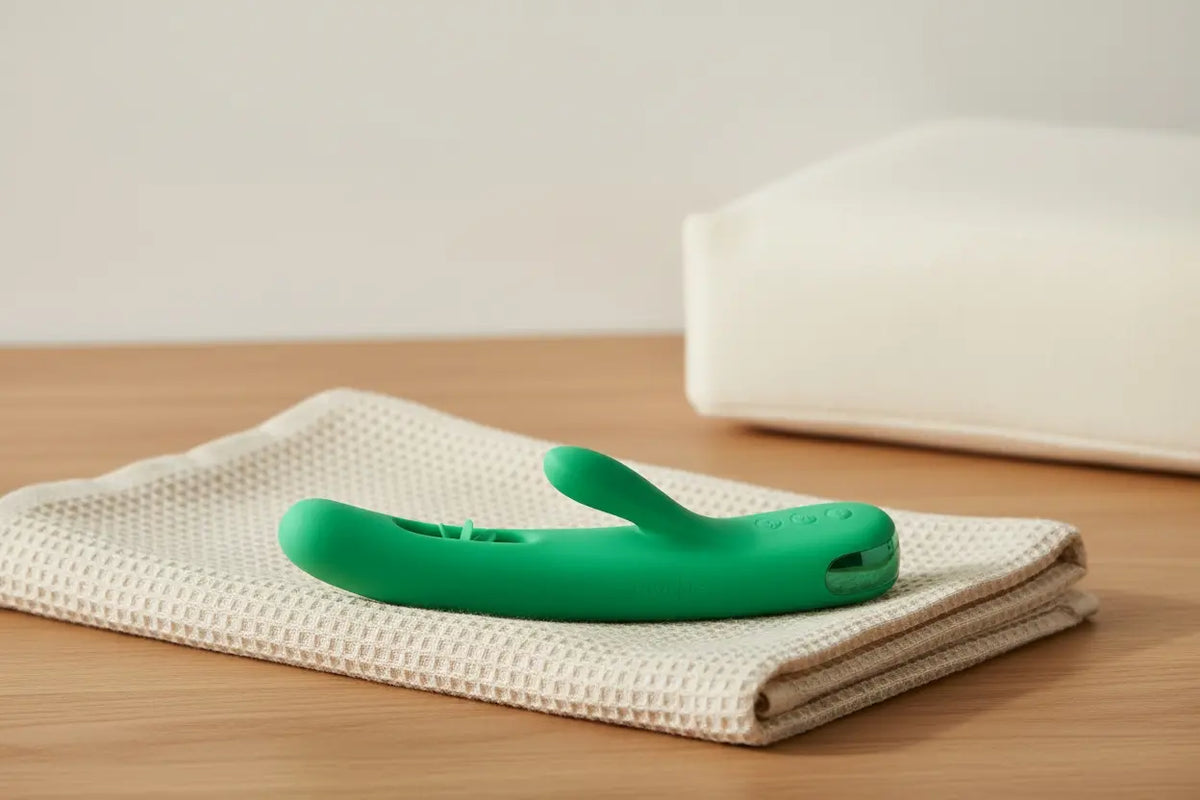

Using a G-spot toy for the first time can feel unfamiliar. You might notice a pleasant sensation, little sensation, pressure, or discomfort. None of those experiences means you have failed or that your body is missing something. A comfortable first experience is about learning what you prefer, not finding one “correct” spot or reaching a particular result.
These five common mistakes are easier to avoid when you focus on gentle adjustments and give yourself permission to stop. If you have persistent pain or urinary symptoms, a healthcare professional can help you understand the cause.
Mistake 1: Treating the G-spot as a fixed point everyone should find
The term “G-spot” is often used for an area of sensitivity some people report along the front vaginal wall. It is not a reliable map to a specific depth or texture. A systematic review found that research has not established agreement on a distinct G-spot structure, location, or size.
Try instead: Stay curious about what feels comfortable to you. You do not need to press harder, use a fixed angle, or measure how far a device goes to prove you have found anything. Our anterior vaginal wall anatomy guide explains why experiences vary.
Mistake 2: Rushing past comfort cues
There is no required warm-up time or number of sessions before a person “should” enjoy internal touch. Stress, fatigue, arousal, and personal preference can all affect how a moment feels. Trying to follow a timer may make it harder to notice whether you actually want to continue.
Try instead: Begin with a pace and activity that feel comfortable. If you choose to use an internal device, start gently and pause whenever you want. If you are new to controls and settings, our first-time rabbit vibrator guide covers those basics in more detail.
Mistake 3: Using more pressure to chase a particular angle
When a sensation is subtle, it can be tempting to push firmly or keep changing angle until something feels dramatic. A fixed “ideal” curve or position does not fit every body. Firm pressure can simply make an area feel uncomfortable.
Try instead: Use a light touch and make one small change at a time. Adjust pressure or position only while it still feels comfortable. If you notice a strong urge to urinate, pain, or burning, stop rather than treating it as a sign to continue. Our urinary urgency guide explains when that feeling deserves medical attention.
Mistake 4: Ignoring friction or assuming one lubricant rule fits everyone
Friction can make touch less comfortable. Lubricant may help when dryness is part of the issue, but no particular amount or formula is right for every person and device. Check the device and lubricant instructions for compatibility, and consider your own sensitivity. If a product stings or irritates, stop using it.
Try instead: Choose a lubricant that works for your body and the device material, then add more only as needed. The American College of Obstetricians and Gynecologists (ACOG) includes lubricant among comfort measures while advising an evaluation for frequent or severe pain. Lubricant is not a way to push through pain that needs assessment.
Mistake 5: Turning up intensity or changing motion to overcome discomfort
A stronger setting is not necessarily a better one. If a sensation becomes too intense, numb, or painful, switching to a rotating device does not guarantee that the problem will go away. Claims that one movement prevents nerve fatigue or tissue damage while another causes it have not been established for these consumer products.
Try instead: Reduce the setting, use less pressure, change activities, or stop. Clean and care for your device according to its instructions before and after use. If numbness, pain, or other symptoms persist after you stop, speak with a healthcare professional.
How should you compare a first device?
Look at details you can verify: dimensions, shape, controls, available settings, and care instructions. A design you can hold and adjust easily may be more manageable for you. It cannot guarantee comfort, a specific sensation, or a medical result.
If you are considering VINDANI, its current product page lists its dimensions, materials, and settings. Compare those details with your preferences rather than choosing a product because of an unverified angle or a promise that one motion will prevent numbness.
Frequently asked questions
How long should it take to feel comfortable with a G-spot toy?
There is no set number of minutes or sessions. Go at a pace that works for you, and stop if the experience is uncomfortable.
Does not feeling a distinct spot mean something is wrong?
No. People describe different sensations, and research has not identified one fixed landmark that everyone should feel.
Should I try a different angle if I feel urinary urgency?
Pause first. You may decide to use the bathroom or stop the activity. If urgency keeps returning, occurs outside intimate activity, or comes with pain, burning, or leakage, ask a healthcare professional for advice.
Will a rotating toy prevent numbness?
No product should promise that. If a sensation feels numbing or too intense, reduce pressure or stop. Seek medical advice if numbness persists or recurs.
A better first experience has no deadline
You do not have to find a particular spot or achieve a particular outcome. Notice your comfort, adjust gently, and give yourself permission to stop. If symptoms repeatedly get in the way, professional advice is more useful than trying to solve them by changing devices alone.
This article is for general education and is not a diagnosis or a substitute for individual medical advice.